



World Politics: Trend and Transformation, available as a PDF, explores global issues, encouraging critical assessment of choices and their future impact on students.
This resource, including editions from 2016-2017 and beyond, examines international relations through scholarly perspectives, focusing on states and systems.
Carnegie Council’s contributions, alongside insights from Rosenthal and Bremmer, provide a thought-provoking approach to understanding evolving geopolitical landscapes.
Historical Context of Studying World Politics
Historically, the study of world politics has been intrinsically linked to the interactions between states within the international system, a foundational concept explored in resources like “World Politics: Trend and Transformation.”
Early analyses centered on state-centric views, but contemporary scholarship, as presented in available PDF versions, acknowledges the growing complexity of global interactions.
The Carnegie Council’s work, alongside contributions from scholars like Rosenthal and Bremmer, highlights the evolution of this field, moving beyond traditional state-focused approaches.
Understanding this historical trajectory is crucial for critically assessing current trends and forecasting future transformations in international affairs, as detailed within the text.
The Role of States in the International System
Traditionally, states have been considered the primary actors within the international system, a core tenet explored in “World Politics: Trend and Transformation,” accessible in PDF format.
However, contemporary analysis, as reflected in the text, acknowledges a shifting landscape where non-state actors increasingly influence global events.
Despite this evolution, states retain significant power and continue to shape international norms, security dynamics, and economic structures.
The Carnegie Council’s perspective, alongside scholarly contributions, emphasizes the enduring, yet evolving, role of states in navigating complex global challenges.

Key Trends Shaping World Politics (2016-2024)
“World Politics: Trend and Transformation” (PDF) details globalization, the rise of non-state actors, and shifting power dynamics defining the 2016-2024 period.
Globalization and its Impact
Globalization, a central theme within “World Politics: Trend and Transformation” (available as a PDF), profoundly reshapes international relations. The text likely examines its multifaceted impact, extending beyond economic interdependence to encompass cultural exchange and interconnectedness.
This includes analyzing the benefits – increased trade, technological diffusion – alongside challenges like economic inequality and the erosion of state sovereignty. The PDF resource probably delves into how globalization influences political systems, fostering both cooperation and conflict.
Furthermore, it likely assesses the role of international institutions in managing globalization’s consequences and navigating its inherent complexities, offering a comprehensive overview for students.
Rise of Non-State Actors
“World Politics: Trend and Transformation”, in its PDF format, likely dedicates significant attention to the increasing influence of non-state actors in the international system. This encompasses multinational corporations, international organizations, and, crucially, non-governmental organizations (NGOs).
The resource probably analyzes how these actors challenge traditional state-centric views of world politics, impacting policy-making and global governance. It likely explores their roles in areas like humanitarian aid, advocacy, and even conflict, demonstrating their growing power.
Furthermore, the PDF likely assesses the implications of this shift for international security and cooperation.
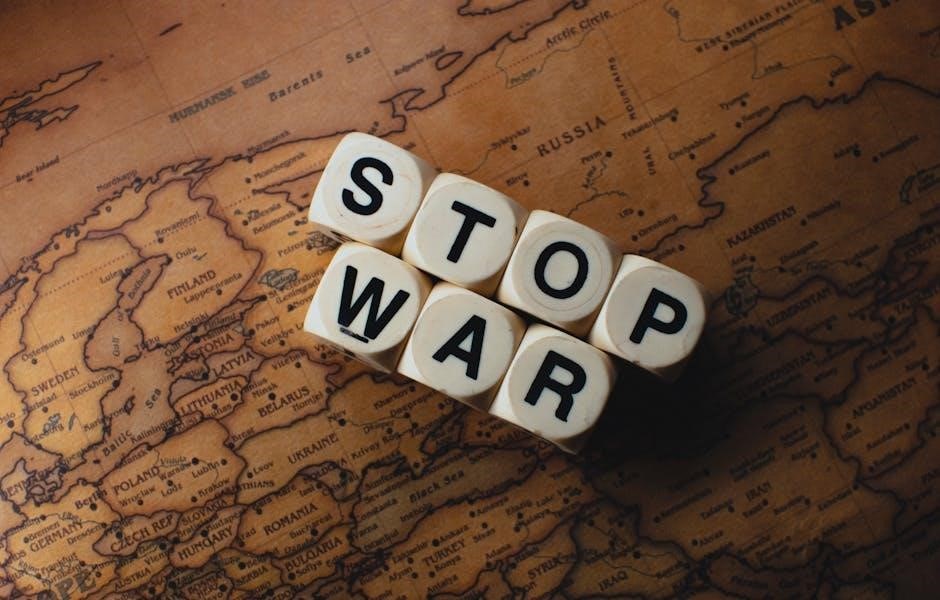
Shifting Power Dynamics: Multipolarity vs. Unipolarity
“World Politics: Trend and Transformation”, as a PDF resource, undoubtedly examines the evolving global power structure. It likely contrasts the historical period of unipolarity, dominated by the United States, with the emerging trend towards multipolarity.
The document probably analyzes the rise of China and its implications for the international system, alongside the roles of other emerging powers. It likely assesses how this shift impacts global governance, security alliances, and economic interdependence.
The PDF likely explores the challenges and opportunities presented by a more distributed power landscape.
Transformations in International Relations Theory
“World Politics: Trend and Transformation”, in PDF format, likely analyzes core IR theories – Realism, Liberalism, and Constructivism – and their contemporary challenges.
It probably assesses how these frameworks explain current global shifts.
Realism and its Contemporary Challenges
Realism, a dominant force in international relations, posits states as rational actors prioritizing security in an anarchic system. However, “World Politics: Trend and Transformation”, as a PDF resource, likely examines the challenges to this traditional view.
Globalization, the rise of non-state actors, and increasing interdependence complicate the state-centric realist model. The text probably explores whether power transitions, particularly the rise of China, are adequately explained by realist frameworks.
Furthermore, it may analyze if concepts like humanitarian intervention and the responsibility to protect challenge realism’s emphasis on state sovereignty, and if new security threats necessitate a re-evaluation of core realist assumptions.
Liberalism and the Pursuit of Cooperation
Liberalism, contrasting with realism, emphasizes cooperation, international institutions, and democratic values in world politics. The “World Politics: Trend and Transformation” PDF likely details how liberal approaches seek to mitigate conflict through interdependence and shared interests.
It probably assesses the effectiveness of international organizations – a core tenet of liberalism – in addressing global challenges. The text may explore whether the pursuit of cooperation is hindered by rising nationalism or great power competition.
Furthermore, it could analyze the role of international law and norms in fostering a more peaceful and just international order, and the limitations of liberal ideals in a complex world.
Constructivism and the Role of Ideas
Constructivism, as presented in “World Politics: Trend and Transformation” PDF, highlights the significance of ideas, norms, and identities in shaping international relations. Unlike materialist approaches, it argues that state interests and behaviors are socially constructed, not predetermined.
The text likely examines how shared understandings and beliefs influence state interactions, potentially leading to cooperation or conflict. It may explore the role of discourse and persuasion in altering perceptions and fostering new norms.
Furthermore, it could analyze how identities – national, regional, or global – shape foreign policy and contribute to the evolution of the international system.
Specific Geopolitical Transformations
“World Politics: Trend and Transformation” PDFs likely detail shifts in power, including the changing roles of the US and the rise of China, alongside regional conflicts;
The Changing Role of the United States
Analyzing PDFs like “World Politics: Trend and Transformation” reveals evolving perspectives on the United States’ position in global affairs. Traditionally a unipolar power, the US now navigates a more complex, multipolar world.
These resources likely explore how domestic political shifts, economic factors, and foreign policy decisions impact America’s influence. Discussions may center on the challenges to US hegemony, including the rise of China and other regional powers.
Furthermore, the PDFs probably address the implications of these changes for international institutions and the future of global leadership, as examined by scholars like Rosenthal and Bremmer.
The Rise of China and its Implications
Examining “World Politics: Trend and Transformation” PDFs highlights China’s increasing prominence as a global power. These resources likely detail China’s economic growth, military modernization, and expanding diplomatic influence.
The implications of this rise are multifaceted, potentially shifting the international system from unipolarity towards multipolarity. Analyses probably cover the impact on US-China relations, regional security dynamics in Asia, and global trade patterns.
Scholarly perspectives, as found within these PDFs, likely assess the challenges and opportunities presented by China’s ascent, considering its role in international institutions.
Regional Conflicts and Their Global Impact
“World Politics: Trend and Transformation” PDFs likely analyze how localized conflicts increasingly possess global ramifications. These resources probably detail how regional instability can disrupt international trade, fuel humanitarian crises, and contribute to transnational security threats.
The materials likely explore the interconnectedness of conflicts, examining how they can escalate or be exacerbated by external actors and global power dynamics.
Scholarly analyses within these PDFs likely assess the effectiveness of international interventions and the challenges of conflict resolution in a complex, multipolar world.
Critical Issues in Contemporary World Politics
“World Politics: Trend and Transformation” PDFs address pressing global challenges like climate change, economic inequality, and the future of international institutions.
These resources likely encourage students to critically evaluate complex problems and potential solutions.
Climate Change and International Security
“World Politics: Trend and Transformation” PDFs likely delve into the complex nexus of climate change and international security, a critical contemporary issue.
These resources probably explore how environmental degradation exacerbates existing conflicts and creates new security threats, impacting global stability.
The materials may analyze international cooperation efforts – or lack thereof – to mitigate climate change and address its security implications, examining the roles of states and institutions;
Furthermore, they could assess the geopolitical consequences of climate-induced migration, resource scarcity, and extreme weather events, fostering critical thinking about future scenarios.
Global Economic Interdependence and Inequality
“World Politics: Trend and Transformation” PDFs likely address the intricate relationship between global economic interdependence and rising inequality.
These resources probably analyze how increased trade and financial flows impact different nations and social groups, potentially widening the gap between rich and poor.
The materials may explore the consequences of economic globalization, including job displacement, wage stagnation, and the erosion of social safety nets.
Furthermore, they could assess the role of international institutions in managing economic interdependence and promoting more equitable outcomes, fostering critical analysis.
The Future of International Institutions
“World Politics: Trend and Transformation” PDFs likely dedicate sections to the evolving role of international institutions in a changing world.
These resources probably examine the challenges facing organizations like the UN, WTO, and IMF, including issues of legitimacy, effectiveness, and representation.
The materials may explore potential reforms to enhance institutional capacity and address emerging global threats, such as climate change and pandemics.
Furthermore, they could assess the rise of new institutions and governance mechanisms, fostering critical debate about the future of multilateralism.

Analyzing Future Global Trends and Forecasts
“World Politics: Trend and Transformation” PDFs analyze global forecasts, including technological advancements and demographic shifts, impacting the international system’s future.
Technological Advancements and World Politics
Examining “World Politics: Trend and Transformation” PDFs reveals a crucial intersection between technological progress and international relations. The accelerating pace of innovation—spanning artificial intelligence, biotechnology, and information technologies—fundamentally reshapes state power, economic competitiveness, and the nature of conflict.
These advancements introduce both opportunities for enhanced cooperation and significant risks, including cyber warfare, disinformation campaigns, and the exacerbation of existing inequalities. Analyzing these dynamics is paramount for understanding future global trends, as highlighted within the resource’s comprehensive framework.
The PDF materials emphasize the need for proactive governance and international collaboration to harness technology’s benefits while mitigating its potential harms.
Demographic Shifts and Political Consequences
“World Politics: Trend and Transformation” PDFs underscore the profound impact of demographic changes on the global political landscape. Population growth, aging societies, migration patterns, and urbanization are reshaping state capacities, resource demands, and societal structures.
These shifts create both opportunities and challenges, influencing political stability, economic development, and international security. The resource emphasizes the need to analyze these trends to anticipate potential conflicts, manage resource scarcity, and foster inclusive governance.
Understanding these consequences is vital for navigating the complexities of the 21st-century international system, as detailed within the PDF’s analytical framework.
Potential Future Scenarios for the International System
“World Politics: Trend and Transformation” PDFs advocate for proactive scenario planning to address an uncertain future. The material encourages students to critically assess global trends and their potential convergence, leading to diverse outcomes.
Possible scenarios range from continued multipolarity and increased great power competition to renewed globalization or fragmented regionalism. Analyzing these possibilities, as the PDF suggests, requires considering technological advancements, demographic shifts, and evolving power dynamics.
Ultimately, understanding these potential futures is crucial for informed policymaking and effective international cooperation.
The Carnegie Council’s Perspective on World Politics
Carnegie Council, featured in “World Politics: Trend and Transformation” PDFs, emphasizes ethical considerations in international affairs, with contributions from Rosenthal and Bremmer.
Ethical Considerations in International Affairs
The Carnegie Council for Ethics in International Affairs plays a crucial role in framing discussions surrounding global challenges, as highlighted in resources like “World Politics: Trend and Transformation” PDFs.
The Council’s approach encourages a critical examination of the moral dimensions inherent in international relations, prompting students and scholars to assess the consequences of political choices.
This involves analyzing the “problems, payoffs, pitfalls, and paradoxes” associated with global decision-making, fostering a deeper understanding of the ethical responsibilities within the international system.
Ultimately, the Carnegie Council advocates for a more ethically informed and responsible approach to navigating the complexities of world politics.
Joel Rosenthal and Ian Bremmer’s Contributions
Joel Rosenthal, Carnegie Council President, and Ian Bremmer, Eurasia Group President, offer significant insights into contemporary world politics, particularly as featured in discussions related to “World Politics: Trend and Transformation” materials.
Their collaborative work focuses on dissecting the intricate dynamics shaping the global landscape, providing a nuanced understanding of emerging trends and potential future scenarios.
They emphasize a thought-provoking approach, encouraging critical analysis of the forces driving international affairs and their implications for students and policymakers alike.
Their combined expertise enriches the study of global challenges and opportunities.
The Work of Özgür Tüfekçi and Rahman Dağ
Özgür Tüfekçi and Rahman Dağ authored an approach to world politics, analyzing trends and transformations through the lens of leading IR scholars.
Their Approach to Understanding World Politics
Özgür Tüfekçi and Rahman Dağ’s work centers on a comprehensive examination of international politics, intrinsically linked to the interactions between states within the global system. Their approach, detailed in publications like World Politics: Trend and Transformation, emphasizes a scholarly perspective on evolving dynamics.
They delve into trends and transformations, not in isolation, but through the interpretations of prominent International Relations scholars. This methodology encourages a nuanced understanding of complex geopolitical shifts, offering students and researchers a framework for critically assessing global challenges and potential future scenarios. Their research provides a valuable contribution to the field.
Key Insights from Their Research
Tüfekçi and Dağ’s research, as presented in World Politics: Trend and Transformation, highlights the interconnectedness of global events and the crucial role of scholarly analysis. A central insight is the importance of understanding trends not as isolated occurrences, but as components of larger, systemic shifts.
Their work emphasizes critically evaluating the “problems, payoffs, pitfalls, and paradoxes” inherent in global choices. By synthesizing perspectives from leading IR scholars, they offer a framework for anticipating the future impact of current decisions, particularly for students navigating an increasingly complex world.